Today, I am reading: We are ‘gobbling/ˈɡɒbl/ up nature’: UN urges countries to restore 1bn hectares of land
Global governments will be expected to restore an ecosystem the size of China over the next decade in a crucial move to reverse/rɪˈvɜːs/ climate change.
The United Nations urged/ɜːdʒ/urge today that current attempts at conserving/kənˈsɜːv/ healthy ecosystems are “insufficient/ˌɪnsəˈfɪʃnt/ to prevent large-scale ecosystem collapse”.
Proposals central to the UN Decade on Ecosystem Restoration set out terms to create a worldwide #GenerationRestoration. This will be achieved by reinvigorating/ˌriːɪnˈvɪɡəreɪt/reinvigorate 1 billion hectares of biodiverse land, such as marine/məˈriːn/ and agricultural sites.
The call to action stems from a report revealing we are using 1.6 planet Earths to maintain our current way of life.
The UNEP hopes to encourage others to convey “a message of action and hope”, from tending to small scale projects, such as city parks and river valleys, to threatened larger initiatives that rest in the hands of private investors and executive powers.
Failing to accelerate these processes has the potential to undermine the well-being of 3.2 billion people and would cost about 10 per cent of the annual global gross product through loss of species and eco-services.
Governments are also being urged to have a serious rethink of their COVID recovery plans, of which only 18 per cent can currently be classified as green.
Why we need more nature to fight the climate crisis
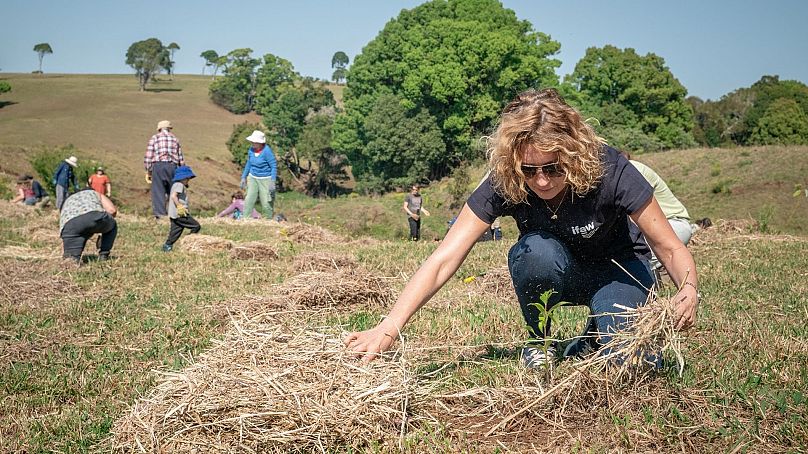
Half of the world’s GDP is tied to nature, be it food production or water supplies.
A sharp/ʃɑːp/ financial increase in creating more natural environmental projects will be one of the only ways to adhere/ədˈhɪə(r)/ to the Paris Agreement’s commitment to limit global warming to well below 2 degrees.
Creating a #GenerationRestoration has the potential to achieve the following:
- Every dollar invested in restoration can create up to €25 in economic benefits.
- Restoring marine fish populations could increase production by 16.5 million tonnes each year.
- Restoring just 15 per cent of converted lands and halting further conversion could avoid 60 per cent of expected species extinctions.
“The UN Decade on Ecosystem Restoration comes not a moment too soon,” Inger Andersen, Executive Director of the UN’s Environment Programme, tells Euronews Green. She believes the initiative will be instrumental/ˌɪnstrəˈmentl/ in ending our culture “take, make and waste”.
“Humanity/hjuːˈmænəti/ is gobbling/ˈɡɒbl/gobble up nature, wasting resources and pumping greenhouse gases into the air. We are using the equivalent of 1.6 Earths to maintain our current way of life, at the cost of the world’s ecosystems. Stopping the damage isn’t enough. We need to reverse it,” says Andersen.
How are countries contributing to ecosystem restoration?
Pakistan has been heavily involved in celebrating the launch of this call to action due to its role as hosts of this year’s World Environment Day.
Over the next five years, the country’s 10 Billion Tree Tsunami programme will aim to expand and restore Pakistan’s mangroves and forests, while also generating jobs amid the COVID-19 pandemic.
There are also efforts to restore wetlands, such as the Miani Hor Lagoon, home to the largest mangrove forests along the Balochistan coast.
Rehabilitating degraded farmland in Eastern Cape, South Africa, has been widely regarded as one of the world’s most ambitious restoration projects thus far.
Grounds the size of Cyprus suffered for years with little to no rain, creating masses of dry land and wasted opportunity.
In 2019 teams of agricultural workers replanted indigenous thicket across hundreds of plots in a move that was helmed as one of the most ambitious restoration projects of our time.
The plant, known as “speckboom”, is widely regarded as a better absorber of carbon dioxide than other trees in the area.
If all goes to plan, the crops will stand at over 16 feet tall for years to come, mitigating/ˈmɪtɪɡeɪtɪŋ/ some of the area's environmental impact and sustaining incomes for local workers.
Vocabulary:
captain: đội trưởng
abandon: bỏ rơi
possess: sở hữu
owe: nợ
liable: chịu trách nhiệm
contrast: tương phản
subordinate: cấp dưới
entrepreneur: doanh nhân
feasibility: tính khả thi
capable: có khả năng
delegate: ủy nhiệm
assigning: phân công
exert: gắng sức
qualities: phẩm chất
foresight: tầm nhìn xa
visionary: nhin xa trông rộng
account: tài khoản
counter: quầy tính tiền
acquire: thu được, có được
feet: bàn chân
ceiling: trần nhà
rush: gấp rút
gobbling: ngấu nghiến
reverse: đảo ngược
urged: thúc giục
conserve: giữ gìn
insufficient: không đủ
reinvigorating: tái sinh
marine: hải sản
initiatives: có khả năng phán đoán
initially: ban đầu
sharp: nhọn
adhere: tuân thủ
instrumental: nhạc cụ
Humanity: nhân loại
amid: ở giữa
helmed :
mitigating: giam nhẹ
income: thu nhập= earning
Translate:
Global governments will be expected to restore an ecosystem the size of China over the next decade in a crucial move to reverse/rɪˈvɜːs/ climate change.
Các chính phủ toàn cầu được kỳ vọng sẽ khôi phục một hệ sinh thái có quy mô tương đương với Trung Quốc trong thập kỷ tới trong một động thái quan trọng nhằm đảo ngược biến đổi khí hậu.
The United Nations urged/ɜːdʒ/urge today that current attempts at conserving/kənˈsɜːv/ healthy ecosystems are “insufficient/ˌɪnsəˈfɪʃnt/ to prevent large-scale ecosystem collapse”.
Liên hợp quốc hôm nay kêu gọi rằng những nỗ lực hiện tại nhằm bảo tồn các hệ sinh thái lành mạnh là “không đủ để ngăn chặn sự sụp đổ hệ sinh thái quy mô lớn”.
Proposals central to the UN Decade on Ecosystem Restoration set out terms to create a worldwide #GenerationRestoration. This will be achieved by reinvigorating/ˌriːɪnˈvɪɡəreɪt/reinvigorate 1 billion hectares of biodiverse land, such as marine/məˈriːn/ and agricultural sites.
Các đề xuất trọng tâm của Thập kỷ Liên hợp quốc về Phục hồi Hệ sinh thái đưa ra các điều khoản để tạo ra một #GenerationRestoration trên toàn thế giới. Điều này sẽ đạt được bằng cách hồi sinh 1 tỷ ha đất đa dạng sinh học, chẳng hạn như các khu vực biển và nông nghiệp.
The call to action stems from a report revealing we are using 1.6 planet Earths to maintain our current way of life.
Lời kêu gọi hành động bắt nguồn từ một báo cáo tiết lộ rằng chúng ta đang sử dụng 1,6 hành tinh Trái đất để duy trì cách sống hiện tại của chúng ta.
The UNEP hopes to encourage others to convey “a message of action and hope”, from tending to small scale projects, such as city parks and river valleys, to threatened larger initiatives that rest in the hands of private investors and executive powers.
UNEP hy vọng sẽ khuyến khích những người khác truyền tải “thông điệp hành động và hy vọng”, từ việc chăm sóc các dự án quy mô nhỏ, chẳng hạn như công viên thành phố và thung lũng sông, đến các sáng kiến lớn hơn bị đe dọa nằm trong tay các nhà đầu tư tư nhân và quyền hành pháp.
Failing to accelerate these processes has the potential to undermine the well-being of 3.2 billion people and would cost about 10 per cent of the annual global gross product through loss of species and eco-services.
Không đẩy nhanh các quá trình này có khả năng làm suy yếu hạnh phúc của 3,2 tỷ người và sẽ tiêu tốn khoảng 10% tổng sản phẩm toàn cầu hàng năm do mất đi các loài sinh vật và các dịch vụ sinh thái.
Governments are also being urged to have a serious rethink of their COVID recovery plans, of which only 18 per cent can currently be classified as green.
Các chính phủ cũng đang được kêu gọi xem xét lại nghiêm túc về các kế hoạch khôi phục COVID của họ, trong đó chỉ 18% hiện có thể được phân loại là xanh.
Why we need more nature to fight the climate crisis
Tại sao chúng ta cần nhiều thiên nhiên hơn để chống lại cuộc khủng hoảng khí hậu
Half of the world’s GDP is tied to nature, be it food production or water supplies.
Một nửa GDP của thế giới gắn liền với tự nhiên, có thể là sản xuất lương thực hoặc cung cấp nước.
A sharp/ʃɑːp/ financial increase in creating more natural environmental projects will be one of the only ways to adhere/ədˈhɪə(r)/ to the Paris Agreement’s commitment to limit global warming to well below 2 degrees.
Sự gia tăng tài chính mạnh mẽ trong việc tạo ra nhiều dự án môi trường tự nhiên hơn sẽ là một trong những cách duy nhất để tuân thủ cam kết của Thỏa thuận Paris nhằm hạn chế sự nóng lên toàn cầu xuống dưới 2 độ C.
Creating a #GenerationRestoration has the potential to achieve the following:
Tạo #GenerationRestoration có khả năng đạt được những điều sau:
- Every dollar invested in restoration can create up to €25 in economic benefits.
- Mỗi đô la đầu tư vào việc trùng tu có thể tạo ra lợi ích kinh tế lên đến € 25.
- Restoring marine fish populations could increase production by 16.5 million tonnes each year.
- Phục hồi quần thể cá biển có thể tăng sản lượng lên 16,5 triệu tấn mỗi năm.
- Restoring just 15 per cent of converted lands and halting further conversion could avoid 60 per cent of expected species extinctions.
- Chỉ phục hồi 15% diện tích đất đã chuyển đổi và ngừng chuyển đổi thêm nữa có thể tránh được 60% số loài dự kiến tuyệt chủng.
“The UN Decade on Ecosystem Restoration comes not a moment too soon,” Inger Andersen, Executive Director of the UN’s Environment Programme, tells Euronews Green. She believes the initiative will be instrumental/ˌɪnstrəˈmentl/ in ending our culture “take, make and waste”.
Inger Andersen, Giám đốc Điều hành Chương trình Môi trường của Liên hợp quốc, nói với Euronews Green: “Thập kỷ của Liên hợp quốc về khôi phục hệ sinh thái sẽ đến không quá sớm. Cô tin rằng sáng kiến này sẽ là công cụ để chấm dứt nền văn hóa “tận dụng, làm ra và lãng phí” của chúng ta.
“Humanity/hjuːˈmænəti/ is gobbling/ˈɡɒbl/gobble up nature, wasting resources and pumping greenhouse gases into the air. We are using the equivalent of 1.6 Earths to maintain our current way of life, at the cost of the world’s ecosystems. Stopping the damage isn’t enough. We need to reverse it,” says Andersen.
“Nhân loại đang nuốt chửng thiên nhiên, lãng phí tài nguyên và bơm khí nhà kính vào không khí. Chúng tôi đang sử dụng 1,6 Trái đất tương đương để duy trì cách sống hiện tại của mình với cái giá phải trả là các hệ sinh thái trên thế giới. Ngăn chặn thiệt hại là không đủ. Chúng ta cần phải đảo ngược nó, ”Andersen nói.
How are countries contributing to ecosystem restoration?
Các quốc gia đang góp phần phục hồi hệ sinh thái như thế nào?
Pakistan has been heavily involved in celebrating the launch of this call to action due to its role as hosts of this year’s World Environment Day.
Pakistan đã tham gia rất nhiều vào việc kỷ niệm phát động lời kêu gọi hành động này do nước này đóng vai trò chủ nhà của Ngày Môi trường Thế giới năm nay.
Over the next five years, the country’s 10 Billion Tree Tsunami programme will aim to expand and restore Pakistan’s mangroves and forests, while also generating jobs amid the COVID-19 pandemic.
Trong 5 năm tới, chương trình Sóng thần 10 tỷ cây của quốc gia này sẽ nhằm mở rộng và khôi phục rừng ngập mặn và rừng của Pakistan, đồng thời tạo ra việc làm trong bối cảnh đại dịch COVID-19.
There are also efforts to restore wetlands, such as the Miani Hor Lagoon, home to the largest mangrove forests along the Balochistan coast.
Ngoài ra còn có những nỗ lực để khôi phục các vùng đất ngập nước, chẳng hạn như Đầm phá Miani Hor, nơi có những khu rừng ngập mặn lớn nhất dọc theo bờ biển Balochistan.
Rehabilitating degraded farmland in Eastern Cape, South Africa, has been widely regarded as one of the world’s most ambitious restoration projects thus far.
Phục hồi đất nông nghiệp bị suy thoái ở Eastern Cape, Nam Phi, được nhiều người coi là một trong những dự án khôi phục tham vọng nhất thế giới cho đến nay.
Grounds the size of Cyprus suffered for years with little to no rain, creating masses of dry land and wasted opportunity.
Diện tích của Síp phải chịu đựng trong nhiều năm với ít hoặc không có mưa, tạo ra nhiều vùng đất khô cằn và lãng phí cơ hội.
In 2019 teams of agricultural workers replanted indigenous thicket across hundreds of plots in a move that was helmed as one of the most ambitious restoration projects of our time.
Vào năm 2019, các đội công nhân nông nghiệp đã trồng lại những bụi rậm bản địa trên hàng trăm mảnh đất trong một động thái được coi là một trong những dự án khôi phục đầy tham vọng nhất trong thời đại của chúng ta.
The plant, known as “speckboom”, is widely regarded as a better absorber of carbon dioxide than other trees in the area.
Loại cây này, được gọi là “cây đốm”, được nhiều người coi là cây hấp thụ carbon dioxide tốt hơn các cây khác trong khu vực.
If all goes to plan, the crops will stand at over 16 feet tall for years to come, mitigating/ˈmɪtɪɡeɪtɪŋ/ some of the area's environmental impact and sustaining incomes for local workers.
Nếu tất cả diễn ra theo đúng kế hoạch, cây trồng sẽ cao hơn 16 feet trong nhiều năm tới, giảm thiểu một số tác động đến môi trường của khu vực và duy trì thu nhập cho người lao động địa phương.
Nhận xét
Đăng nhận xét