Today I am reading: Greece has reopened: Here's why it's the ideal destination for digital nomads(1)
Greece is one of the first European countries to reopen for tourism. Tourists desperate/ˈdespərət/ for a holiday have wasted no time in getting over there. But this shouldn't put you off. The beauty of Greece is its hundreds of islands where overtourism isn't a problem. Even better, some of them are already covid-free.
But with the flexibility in working location that the pandemic has brought, why stop at a holiday? Especially when the Greek government are incentivising digital nomads to work from the Hellenic country.
Greece is working to bring more digital nomads to its islands
Thanks to legislation/ˌledʒɪsˈleɪʃn/ passed in the Greek Parliament last year, digital nomads who come to Greece can take advantage of a 50 percent tax break for the first seven years. Ostensibly those are Greek taxes we're talking about, which is something to consider. You should of course check out tax laws in relation to your individual situation.
Why do countries want digital nomads?
Greece is not alone, of course, in the drive to draw digital nomads. Consider that Newton's third law of motion— for every reaction there is an equal and opposite reaction—also applies to people in motion. In other words, when the pandemic largely stopped tourism in its tracks entire governments will do cartwheels/ˈkɑːtwiːl/ to recoup /rɪˈkuːp/lost revenues/ˈrevənjuː/.
Before the pandemic, low cost airfares and nifty/ˈnɪfti/ marketing campaigns worked wonders to fill hotel rooms and keep beach bars hopping. But when lockdowns and pervasive/pəˈveɪsɪv/ apprehension/ˌæprɪˈhenʃn/ pulverise/ˈpʌlvəraɪz/ package tourism, it's time for Plan B.
With digital nomads, the idea is to plug/plʌɡ/ some of the revenue gap left by absentee/ˌæbsənˈtiː/ tourists with a qualitatively more compelling/kəmˈpelɪŋ/ brand of wanderer/ˈwɒndərə(r)/. Someone who spends more time in a given place tends to spend more money too. Making remote work a prerequisite for getting those tax breaks almost guarantees/ˌɡærənˈtiː/ the nomad is going to spend more money over time than a typical touris woult.
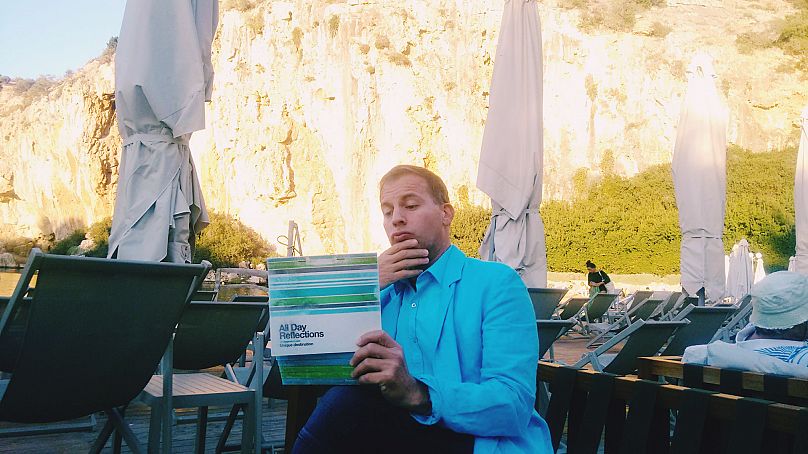
Is Greece a good destination for digital nomads?
When countries around the world are dreaming up new ways to attract digital nomads, why choose Greece? Is a nice beach enough? Alex Patelis, the chief economic adviser to the Prime Minister of Greece, Kyriakos Mitsotakis, says, "Greece is naturally blessed with a temperate climate, lots of sunshine, and a combination of beaches and mountains."
He adds that other advantages are, "a strong currency, the euro, and the safety of the EU institutional framework." On the technical side, Patelis notes that 5G networks are already operational in major Greek cities (and they're coming to some Greek islands too) and that "tax incentives are targeting those who relocate/ˌriːləʊˈkeɪt/ to Greece."
Some countries, such as Finland and Estonia, have floated digital nomad visas (or in the case of Barbados, a digital "welcome stamp") which, sometimes for a set fee, allows you to live and work tax-free in the given country for a specific period of time, usually for up to a year.
Greece's model is a little different. "Greece is a member of the European Union so any EU citizen is allowed to live and work freely out of Greece," Patelis says. "Other than that, there are traditional routes to obtain/əbˈteɪn/ work permits and/or temporary/ˈtemprəri/ stays."
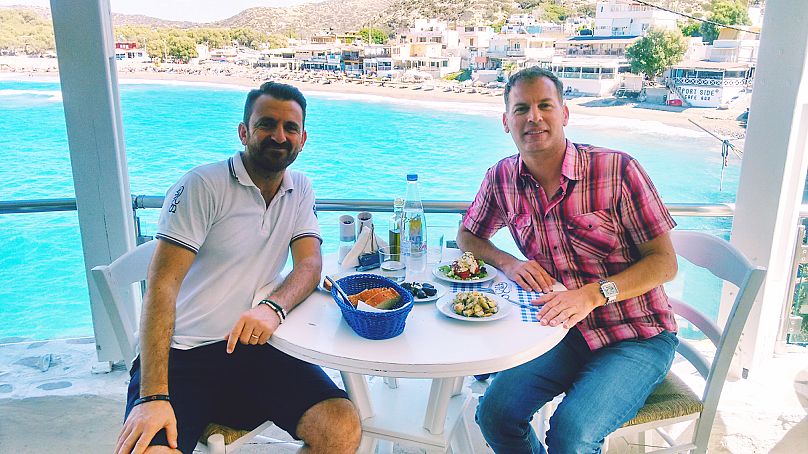
Visas and bureaucracy/bjʊəˈrɒkrəsi/ in Greece
Extended stays in Greece, as in most European Union countries, can be tricky to arrange if you don't hold a European passport, due to Schengen regulations. Remote workers with only British or American passports, for example, need to be mindful that they can only stay in Schengen countries such as Greece for 90 days in any 180-day period. After 90 days, they have to leave the Schengen zone for another 90 days before they can return.
Like any country, Greece has its fair share of bureaucracy and navigating it can be daunting/ˈdɔːntɪŋ/ for the uninitiated/ˌʌnɪˈnɪʃieɪtɪd/—though the website of Enterprise Greece can be a helpful place to start.
But whether you crave/kreɪv/ a change of scenery/ˈsiːnəri/ after being stuck at home in lockdown or simply because you'd rather look before you leap/liːp/—a perfectly valid/ˈvælɪd/ choice—you may find that "just" two months of going digital in Greece is already a lot better than a mere/mɪə(r)/ two-week holiday. After all, who says you need a tax break to call yourself a nomad? Once you board that plane you're already in the realm of the new, different and maybe a little risky, but also the potentially wonderful and productive.
All of that underscores what travel is supposed to be—less about frequent flyer points, more about discovery. So in this sense, the administrative aspects are just one part of the picture.
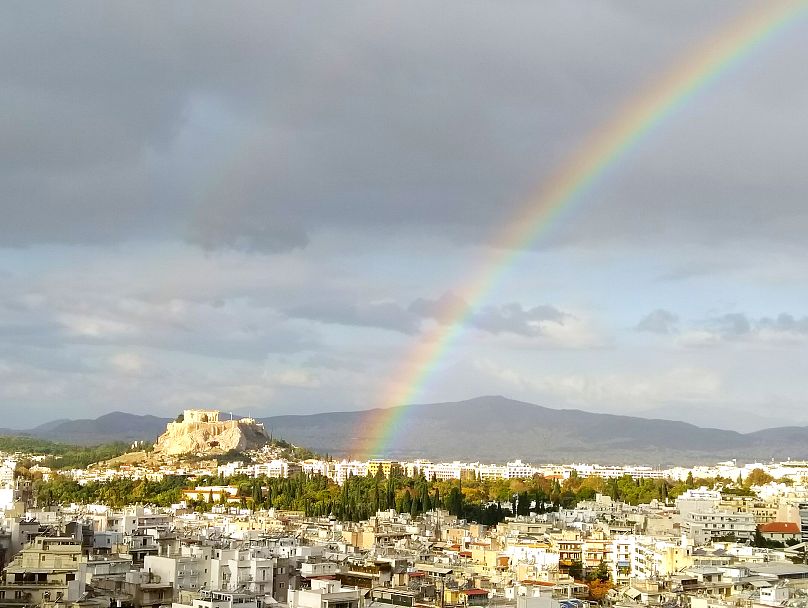
Which Greek island is best for digital nomads?
Consider this, though: if you get yourself all the way to Mykonos, do you really want to spend your time working there? I once did (though a spell of bad weather helped, as the beach wasn't an option) and later regretted/rɪˈɡret/ it.
Remember that Mykonos is just one of hundreds of Greek islands, and probably not one where you'd want to spend a winter unless you find poetry/ˈpəʊətri/ in shuttered up shops and beach clubs.
For year-round sun there are plenty of other places like Syros, with its cosmopolitan island capital of Ermoupoli, dreamy Corfu and the largest Greek island, Crete.
Some smaller Greek islands like Astypalea, which is shaped like a butterfly that landed in the middle of the Aegean Sea, have even before the pandemic been courting a savvier sort of traveller that stays longer. The island's mayor/meə(r)/, Nikos Komineas, recently said in the Greek press that "incentives will be given, such as subsidies, in order to keep people permanently/ˈpɜːmənəntli/ in Astypalea. And this can be done with the development of systems such as the 5G network that will make it easier for employees to work remotely."
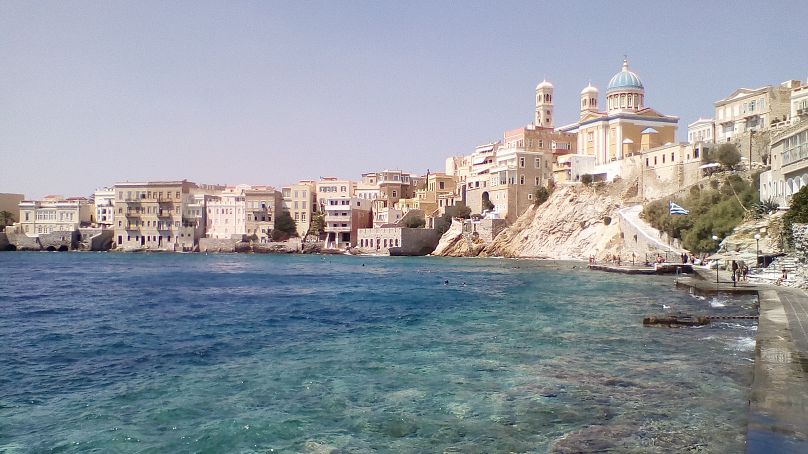
What about Athens?
Of course if you're the type of nomad who needs a world-class city to inspire you, there's always the metropolis/məˈtrɒpəlɪs/ at the centre of it all, Athens. In fact, the City of Athens and the Athens Development and Destination Management Agency recently launched a #BetterInAthens campaign to showcase the Greek capital's digital nomad brigade (cue tales of sun-starved Brits who swapped Piccadilly Circus for the Parthenon).
As far as European cities go, Athens does have a relatively low cost of living, a scintillating array of cultural attractions both ancient and modern and enviable weather most of the year. And it's worth recalling that even though Thessaloniki is Greece's northern second city, it's still further south than Rome.
Bottom line? Just as you would do some basic research before venturing/ˈventʃə(r)/ out on holiday, do your homework before embarking on any digital nomad odyssey.
The lifestyle switch from stuck-at-home (or stuck in traffic) five days a week to waking up with a shimmering/ˈʃɪmə(r)/ Mediterranean horizon beyond your desk and demitasse of robust Greek coffee by your side—but not too close to the computer, if you please!—is definitely an appealing/əˈpiːlɪŋ/ option. But ultimately the only person who can sort out the financial and bureaucratic tangle/ˈtæŋɡl/ is you.
Once you've digested that, Greece's new digital nomad tax cut does emerge as a clear incentive for road warriors/ˈwɒriə(r)/ to pull up closer to the Parthenon—or maybe a nice ribbon of beach on an island shaped like a butterfly—power up the laptop and stay a while.
Source:https://www.euronews.com/travel/2021/05/25/greece-is-gold-for-digital-nomads
Vocabulary:
overtourism: du lịch quá mức
legislation: pháp luật
taxes: thếu
draw: vẽ
opposite: đối diện
cartwheels: bánh đẩy xe
recoup: the lại
revenues: doanh thu
nifty: tiện lời
pervasive: trần lan
apprehension: sự e ngại
pulverise: nghiền thành bột
plug: phích cắm
absentee: vắng mặt
qualitatively: chất lượng
compelling: hấp dẫn, thuyết phục
brand: nhãn hiệu
wanderer: người lang thang
prerequisite: điều kiện tiên quyết
guarantees: đảm bảo
woult: ?
temperate: thời tiết ôn hòa
relocate: di dời
obtain: đạt được
temporary: tạm thời
bureaucracy: quan liêu
trick: lừa
daunting: làm narngt lòng
uninitiated: chưa bắt đầu
crave: thèm muốn
scenery: phong cảnh
leap: nhảy vọt
valid: có hiêu lực
mere: chỉ là
regretted: hối hận
poetry: thơ
landed: hạ canhs
courting:tán tỉnh
mayor: thị trưởng
subsidies: trợ cấp
permanently: vĩnh viễn
metropolis: đô thị
venturing: mạo hiểm
odyssey
shimmering: lung linh
demitasse:
robust: cường trán
appealing: hấp dẫn
tangle: làm rối
digested: tiêu hóa
warriors: chiến binh
Translate:
Greece is one of the first European countries to reopen for tourism. Tourists desperate/ˈdespərət/ for a holiday have wasted no time in getting over there. But this shouldn't put you off. The beauty of Greece is its hundreds of islands where overtourism isn't a problem. Even better, some of them are already covid-free.
Hy Lạp là một trong những quốc gia châu Âu đầu tiên mở cửa trở lại du lịch. Khách du lịch tuyệt vọng cho một kỳ nghỉ đã không lãng phí thời gian để đến đó. Nhưng điều này sẽ không làm bạn nản lòng. Vẻ đẹp của Hy Lạp là hàng trăm hòn đảo, nơi du lịch quá mức không phải là vấn đề. Thậm chí tốt hơn, một số trong số chúng đã không có nguồn gốc.
But with the flexibility in working location that the pandemic has brought, why stop at a holiday? Especially when the Greek government are incentivising digital nomads to work from the Hellenic country.
Nhưng với sự linh hoạt trong địa điểm làm việc mà đại dịch đã mang lại, tại sao lại dừng lại ở một kỳ nghỉ? Đặc biệt là khi chính phủ Hy Lạp đang khuyến khích những người du mục kỹ thuật số đến làm việc từ đất nước Hy Lạp.
Greece is working to bring more digital nomads to its islands
Hy Lạp đang nỗ lực để đưa nhiều người du mục kỹ thuật số đến các hòn đảo của mình
Thanks to legislation/ˌledʒɪsˈleɪʃn/ passed in the Greek Parliament last year, digital nomads who come to Greece can take advantage of a 50 percent tax break for the first seven years. Ostensibly those are Greek taxes we're talking about, which is something to consider. You should of course check out tax laws in relation to your individual situation.
Nhờ luật được Quốc hội Hy Lạp thông qua vào năm ngoái, những người du mục kỹ thuật số đến Hy Lạp có thể được giảm 50% thuế trong bảy năm đầu tiên. Rõ ràng đó là những loại thuế Hy Lạp mà chúng ta đang nói đến, đó là điều cần xem xét. Tất nhiên, bạn nên kiểm tra các luật thuế liên quan đến tình hình cá nhân của bạn.
Why do countries want digital nomads?
Tại sao các quốc gia muốn những người du mục kỹ thuật số?
Tất nhiên, Hy Lạp không đơn độc trong nỗ lực thu hút những người du mục kỹ thuật số. Hãy xem xét rằng định luật thứ ba của Newton về chuyển động - đối với mọi phản ứng đều có một phản ứng ngang bằng và ngược chiều - cũng áp dụng cho những người đang chuyển động. Nói cách khác, khi đại dịch làm ngừng hoạt động du lịch, toàn bộ chính phủ sẽ thực hiện các động tác quay vòng để bù đắp lại doanh thu bị mất.
Trước đại dịch, vé máy bay giá rẻ và các chiến dịch tiếp thị tiện lợi đã làm nên điều kỳ diệu để lấp đầy các phòng khách sạn và giữ cho các quán bar trên bãi biển tăng giá. Nhưng khi các vụ đóng cửa và sự e ngại lan tràn làm bùng phát du lịch trọn gói, thì đó là thời điểm cho Kế hoạch B.
With digital nomads, the idea is to plug/plʌɡ/ some of the revenue gap left by absentee/ˌæbsənˈtiː/tourists with a qualitatively more compelling/kəmˈpelɪŋ/brand of wanderer/ˈwɒndərə(r)/. Someone who spends more time in a given place tends to spend more money too. Making remote work a prerequisite for getting those tax breaks almost guarantees/ˌɡærənˈtiː/ the nomad is going to spend more money over time than a typical touris woult.
Với những người du mục kỹ thuật số, ý tưởng là lấp đầy khoảng cách doanh thu do khách du lịch vắng mặt để lại bằng một thương hiệu lang thang có chất lượng hơn. Một người nào đó dành nhiều thời gian hơn ở một nơi nhất định cũng có xu hướng tiêu nhiều tiền hơn. Việc đưa công việc từ xa trở thành điều kiện tiên quyết để được giảm thuế gần như đảm bảo rằng người du mục sẽ tiêu nhiều tiền hơn theo thời gian so với kiểu du lịch thông thường.
Is Greece a good destination for digital nomads?
Hy Lạp có phải là một điểm đến tốt cho những người du mục kỹ thuật số không?
When countries around the world are dreaming up new ways to attract digital nomads, why choose Greece? Is a nice beach enough? Alex Patelis, the chief economic adviser to the Prime Minister of Greece, Kyriakos Mitsotakis, says, "Greece is naturally blessed with a temperate climate, lots of sunshine, and a combination of beaches and mountains."
Khi các quốc gia trên thế giới đang mơ về những cách thức mới để thu hút những người du mục kỹ thuật số, tại sao lại chọn Hy Lạp? Một bãi biển đẹp là đủ? Alex Patelis, cố vấn kinh tế chính của Thủ tướng Hy Lạp, Kyriakos Mitsotakis, nói, "Hy Lạp được thiên nhiên ưu đãi với khí hậu ôn hòa, nhiều ánh nắng mặt trời và sự kết hợp của các bãi biển và núi."
Một số quốc gia, chẳng hạn như Phần Lan và Estonia, đã thả nổi thị thực du mục kỹ thuật số (hoặc trong trường hợp của Barbados, một "con tem chào mừng" kỹ thuật số), đôi khi với một khoản phí cố định, cho phép bạn sống và làm việc miễn thuế ở một quốc gia nhất định. trong một khoảng thời gian cụ thể, thường lên đến một năm.
Greece's model is a little different. "Greece is a member of the European Union so any EU citizen is allowed to live and work freely out of Greece," Patelis says. "Other than that, there are traditional routes to obtain/əbˈteɪn/ work permits and/or temporary/ˈtemprəri/ stays."
Mô hình của Hy Lạp hơi khác một chút. Patelis nói: “Hy Lạp là một thành viên của Liên minh châu Âu nên bất kỳ công dân EU nào cũng được phép sống và làm việc tự do bên ngoài Hy Lạp. "Ngoài ra, có những con đường truyền thống để xin giấy phép lao động và / hoặc tạm trú."
Visas and bureaucracy/bjʊəˈrɒkrəsi/ in Greece
Thị thực và bộ máy hành chính ở Hy Lạp
Extended stays in Greece, as in most European Union countries, can be tricky to arrange if you don't hold a European passport, due to Schengen regulations. Remote workers with only British or American passports, for example, need to be mindful that they can only stay in Schengen countries such as Greece for 90 days in any 180-day period. After 90 days, they have to leave the Schengen zone for another 90 days before they can return.
Thời gian lưu trú kéo dài ở Hy Lạp, cũng như ở hầu hết các quốc gia thuộc Liên minh Châu Âu, có thể khó thu xếp nếu bạn không có hộ chiếu Châu Âu, do các quy định của Schengen. Ví dụ, những người lao động ở xa chỉ có hộ chiếu Anh hoặc Mỹ cần lưu ý rằng họ chỉ có thể ở lại các nước Schengen như Hy Lạp trong 90 ngày trong bất kỳ khoảng thời gian 180 ngày nào. Sau 90 ngày, họ phải rời khỏi khối Schengen trong 90 ngày nữa trước khi có thể quay trở lại.
Giống như bất kỳ quốc gia nào, Hy Lạp có tỷ lệ quan liêu công bằng và việc điều hướng nó có thể gây khó khăn cho những người chưa quen biết — mặc dù trang web của Enterprise Greek có thể là một nơi hữu ích để bắt đầu.
Nhận xét
Đăng nhận xét